


Java反射的示例分析
一、Class类与Java反射ClasstextFieldC=tetxField.getClass();//tetxField为JTextField类对象反射可访问的主要描述1、访问构造方法每个Constructor对象代表一个构造方法,利用Constructor对象可以操纵相应的构造方法。getConstructors()//获取公有getConstructor(Class...parameterTypes)//获取指定公有getDeclaredConstructors()//获取所有getDeclar
一、Class类与Java反射
Class textFieldC=tetxField.getClass(); //tetxField为JTextField类对象
反射可访问的主要描述
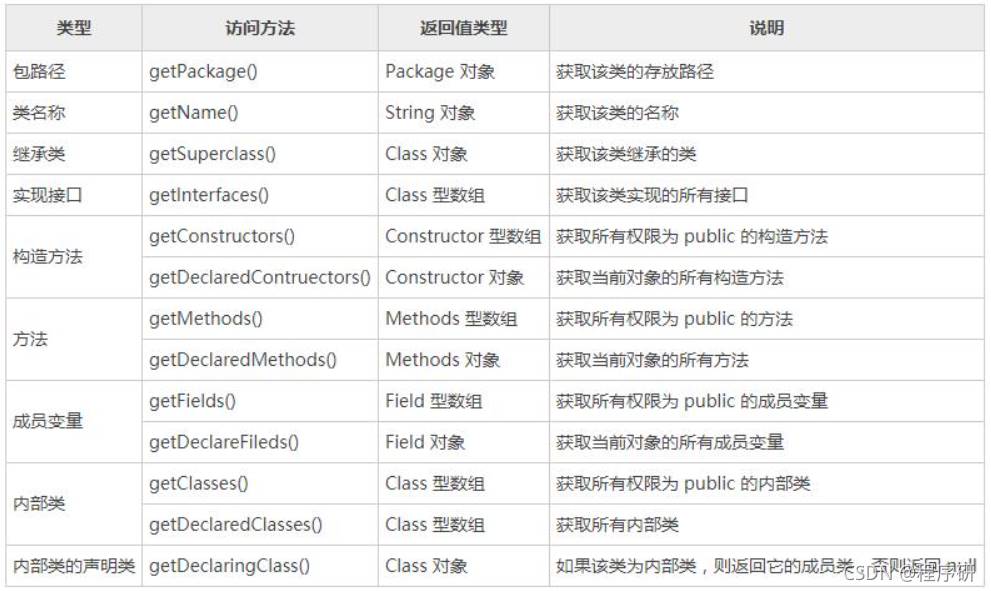
1、访问构造方法
每个Constructor对象代表一个构造方法,利用Constructor对象可以操纵相应的构造方法。
getConstructors()//获取公有getConstructor(Class... parameterTypes)//获取指定公有getDeclaredConstructors()//获取所有getDeclaredConstructor(Class... parameterTypes)//获取指定方法
创建Demo1类,声明String类型成员变量和3个int类型成员变量,并提供3个构造方法。
package bao;
public class Demo1{
String s;
int i,i2,i3;
private Demo1() {
}
protected Demo1(String s,int i) {
this.s=s;
this.i=i;
}
public Demo1(String... strings)throws NumberFormatException{
if(0package bao;
import java.lang.reflect.Constructor;
public class Main {
public static void main(String[] args) {
Demo1 demo=new Demo1("10","20","30");
ClassdemoC=demo.getClass();
//获得所有构造方法
Constructor[] declaredConstryctors=demoC.getDeclaredConstructors();
for(int i=0;i constructor=declaredConstryctors[i];
System.out.println("查看是否允许带有可变数量的参数:"+constructor.isVarArgs());
System.out.println("该构造方法的入口参数类型依次为:");
Class[]parameterTypes=constructor.getParameterTypes(); //获取所有参数类型
for(int j=0;j2、访问成员变量
每个Field对象代表一个成员变量,利用Field对象可以操纵相应的成员变量。
getFields()
getField(String name)
getDeclaredFields()
getDeclaredField(String name)
创建Demo1类依次声明int、fioat、boolean和String类型的成员变量,并设置不同的访问权。
package bao;
public class Demo1{
int i;
public float f;
protected boolean b;
private String s;
}通过反射访问Demo1类中的所有成员变量,将成成员变量的名称和类型信息输出。
package bao;
import java.lang.reflect.Field;
public class Main {
public static void main(String[] args) {
Demo1 demo=new Demo1();
Class demoC=demo.getClass();
//获得所有成员变量
Field[] declaredField=demoC.getDeclaredFields();
for(int i=0;i/*输出结果:
名称为:i
类型为:int
修改前的值为:0
利用方法setInt()修改成员变量的值
修改后的值为:168
名称为:f
类型为:float
修改前的值为:0.0
利用方法 setFloat()修改成员变量的值
修改后的值为:99.9
名称为:b
类型为:boolean
修改前的值为:false
利用方法 setBoolean()修改成员变量的值
修改后的值为:true
名称为:s
类型为:class java.lang.String
在设置成员变量值时抛出异常,下面执行setAccesssible()方法!
修改前的值为:null
利用方法 set()修改成员变量的值
修改后的值为:MWQ
*/
3、访问方法
每个Method对象代表一个方法,利用Method对象可以操纵相应的方法。
getMethods()
getMethod(String name, Class... parameterTypes)
getDeclaredMethods()
getDeclaredMethod(String name, Class... parameterTypes)
创建Demo1类,编写4个典型方法。
package bao;
public class Demo1{
static void staitcMethod() {
System.out.println("执行staitcMethod()方法");
}
public int publicMethod(int i) {
System.out.println("执行publicMethod()方法");
return i*100;
}
protected int protectedMethod(String s,int i)throws NumberFormatException {
System.out.println("执行protectedMethod()方法");
return Integer.valueOf(s)+i;
}
private String privateMethod(String...strings) {
System.out.println("执行privateMethod()方法");
StringBuffer stringBuffer=new StringBuffer();
for(int i=0;i反射访问Demm1类中的所有方法,将方法的名称、入口参数类型、返回值类型等信息输出
package bao;
import java.lang.reflect.Field;
import java.lang.reflect.Method;
public class Main {
public static void main(String[] args) {
Demo1 demo = new Demo1();
Class demoC = demo.getClass();
// 获得所有方法
Method[] declaredMethods = demoC.getDeclaredMethods();
for (int i = 0; i < declaredMethods.length; i++) {
Method method = declaredMethods[i]; // 遍历方法
System.out.println("名称为:" + method.getName()); // 获得方法名称
System.out.println("是否允许带有可变数量的参数:" + method.isVarArgs());
System.out.println("入口参数类型依次为:");
// 获得所有参数类型
Class[] parameterTypes = method.getParameterTypes();
for (int j = 0; j < parameterTypes.length; j++) {
System.out.println(" " + parameterTypes[j]);
}
// 获得方法返回值类型
System.out.println("返回值类型为:" + method.getReturnType());
System.out.println("可能抛出的异常类型有:");
// 获得方法可能抛出的所有异常类型
Class[] exceptionTypes = method.getExceptionTypes();
for (int j = 0; j < exceptionTypes.length; j++) {
System.out.println(" " + exceptionTypes[j]);
}
boolean isTurn = true;
while (isTurn) {
try {
isTurn = false;
if("staitcMethod".equals(method.getName())) {
method.invoke(demo); // 执行没有入口参数的方法
}else if("publicMethod".equals(method.getName())) {
System.out.println("返回值为:"+ method.invoke(demo, 168)); // 执行方法
}else if("protectedMethod".equals(method.getName())) {
System.out.println("返回值为:"+ method.invoke(demo, "7", 5)); // 执行方法
}else {
Object[] parameters = new Object[] { new String[] {"M", "W", "Q" } }; // 定义二维数组
System.out.println("返回值为:"+ method.invoke(demo, parameters));
}
}catch(Exception e) {
System.out.println("在执行方法时抛出异常,"
+ "下面执行setAccessible()方法!");
method.setAccessible(true); // 设置为允许访问
isTurn = true;
}
}
System.out.println();
}
}
}/*输出结果:
名称为:publicMethod
是否允许带有可变数量的参数:false
入口参数类型依次为:
int
返回值类型为:int
可能抛出的异常类型有:
执行publicMethod()方法
返回值为:16800
名称为:staitcMethod
是否允许带有可变数量的参数:false
入口参数类型依次为:
返回值类型为:void
可能抛出的异常类型有:
执行staitcMethod()方法
名称为:protectedMethod
是否允许带有可变数量的参数:false
入口参数类型依次为:
class java.lang.String
int
返回值类型为:int
可能抛出的异常类型有:
class java.lang.NumberFormatException
执行protectedMethod()方法
返回值为:12
名称为:privateMethod
是否允许带有可变数量的参数:true
入口参数类型依次为:
class [Ljava.lang.String;
返回值类型为:class java.lang.String
可能抛出的异常类型有:
在执行方法时抛出异常,下面执行setAccessible()方法!
执行privateMethod()方法
返回值为:
*/
二、使用Annotation功能
1、定义Annotation类型
在定义Annotation类型时,也需要用到用来定义接口的interface关键字,不过需要在interface关键字前加一个“@”符号,即定义Annotation类型的关键字为@interface,这个关键字的隐含意思是继承了java.lang.annotation.Annotation接口。
public @interface NoMemberAnnotation{
String value();
}
@interface:声明关键字。
NoMemberAnnotation:注解名称。
String:成员类型。
value:成员名称。
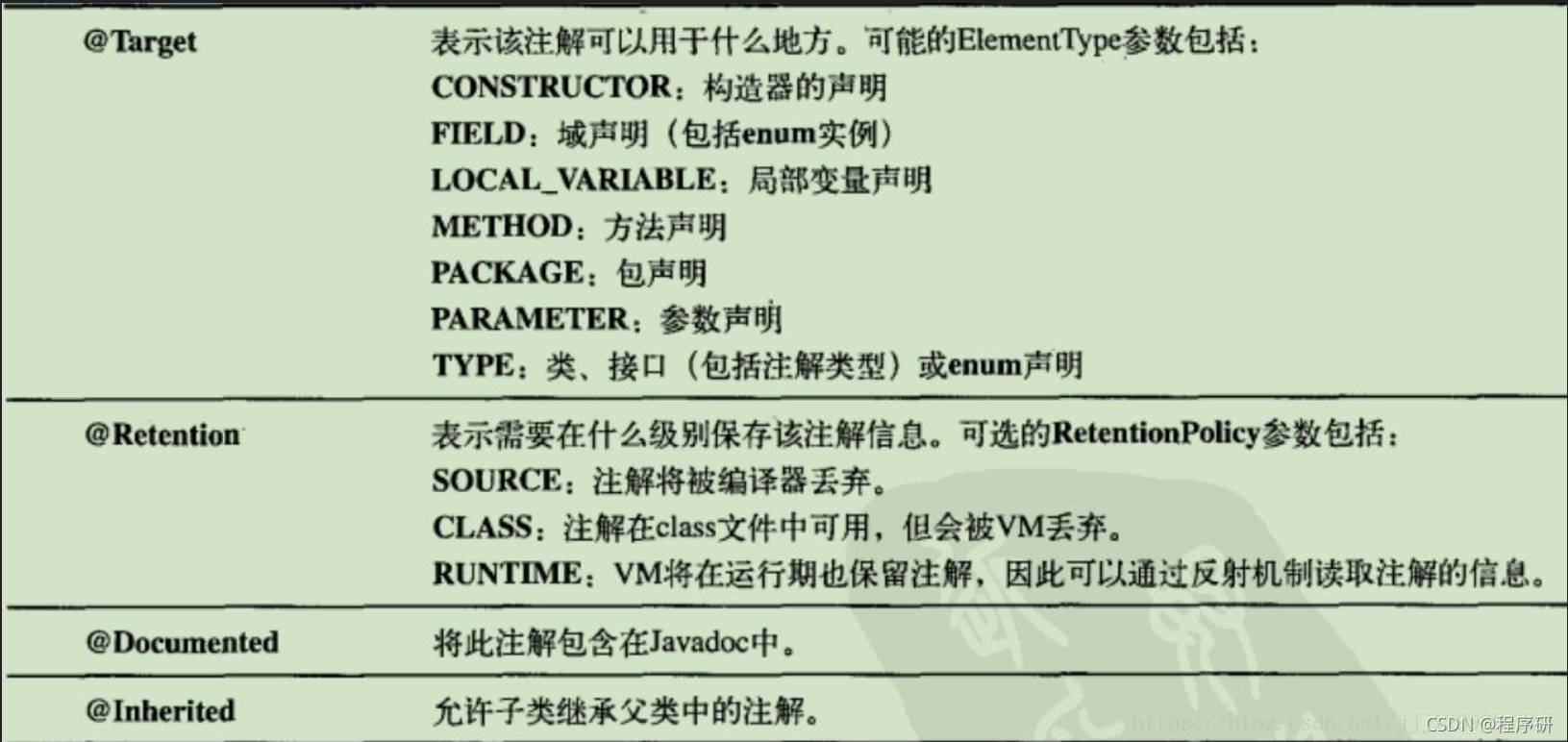
定义并使用Annotation类型
①定义Annotation类型@Constructor_Annotation的有效范围为运行时加载Annotation到JVM中。
package annotationbao;
import java.lang.annotation.ElementType;
import java.lang.annotation.Retention;
import java.lang.annotation.RetentionPolicy;
import java.lang.annotation.Target;
@Target(ElementType.CONSTRUCTOR) // 用于构造方法
@Retention(RetentionPolicy.RUNTIME) // 在运行时加载Annotation到JVM中
public @interface Constructor_Annotation{
String value() default "默认构造方法"; // 定义一个具有默认值的String型成员
}②定义一个来注释字段、方法和参数的Annotation类型@Field_Method_Parameter_Annotation的有效范围为运行时加载Annotation到JVM中
package annotationbao;
import java.lang.annotation.ElementType;
import java.lang.annotation.Retention;
import java.lang.annotation.RetentionPolicy;
import java.lang.annotation.Target;
@Target({ElementType.FIELD,ElementType.METHOD,ElementType.PARAMETER}) // 用于字段、方法和参数
@Retention(RetentionPolicy.RUNTIME) // 在运行时加载Annotation到JVM中
public @interface Field_Method_Parameter_Annotation{
String descrblic(); // 定义一个没有默认值的String型成员
Class type() default void.class; // 定义一个具有默认值的Class型成员
}③编写一个Record类,在该类中运用前面定义Annotation类型的@Constructor_Annotation和@Field_Method_Parameter_Annotation对构造方法、字段、方法和参数进行注释。
package annotationbao;
public class Record {
@Field_Method_Parameter_Annotation(describe = "编号", type = int.class)
int id;
@Field_Method_Parameter_Annotation(describe = "姓名", type = String.class)
String name;
@Constructor_Annotation()
public Record() {
}
@Constructor_Annotation("立即初始化构造方法")
public Record(
@Field_Method_Parameter_Annotation(describe = "编号", type = int.class)
int id,
@Field_Method_Parameter_Annotation(describe = "姓名", type = String.class)
String name) {
this.id = id;
this.name = name;
}
@Field_Method_Parameter_Annotation(describe = "获得编号", type = int.class)
public int getId() {
return id;
}
@Field_Method_Parameter_Annotation(describe = "设置编号")
public void setId(
@Field_Method_Parameter_Annotation(describe = "编号", type = int.class)int id) {
this.id = id;
}
@Field_Method_Parameter_Annotation(describe = "获得姓名", type = String.class)
public String getName() {
return name;
}
@Field_Method_Parameter_Annotation(describe = "设置姓名")
public void setName(
@Field_Method_Parameter_Annotation(describe = "姓名", type = String.class)String name) {
this.name = name;
}
}2、访问Annotation信息
如果在定义Annotation类型时将@Retention设置为RetentionPolicy.RUNTIME,那么在运行程序时通过反射就可以获取到相关的Annotation信息,如获取构造方法、字段和方法的Annotation信息。
联合以上的定义并使用Annotation类型,通过反射访问Record类中的Annotation信息。
package annotationbao;
import java.lang.annotation.*;
import java.lang.reflect.*;
public class Main_05 {
public static void main(String[] args) {
Class recordC = null;
try {
recordC = Class.forName("Record");
} catch (ClassNotFoundException e) {
e.printStackTrace();
}
System.out.println("------ 构造方法的描述如下 ------");
Constructor[] declaredConstructors = recordC
.getDeclaredConstructors(); // 获得所有构造方法
for (int i = 0; i < declaredConstructors.length; i++) {
Constructor constructor = declaredConstructors[i]; // 遍历构造方法
// 查看是否具有指定类型的注释
if (constructor
.isAnnotationPresent(Constructor_Annotation.class)) {
// 获得指定类型的注释
Constructor_Annotation ca = (Constructor_Annotation) constructor
.getAnnotation(Constructor_Annotation.class);
System.out.println(ca.value()); // 获得注释信息
}
Annotation[][] parameterAnnotations = constructor
.getParameterAnnotations(); // 获得参数的注释
for (int j = 0; j < parameterAnnotations.length; j++) {
// 获得指定参数注释的长度
int length = parameterAnnotations[j].length;
if (length == 0) // 如果长度为0则表示没有为该参数添加注释
System.out.println(" 未添加Annotation的参数");
else
for (int k = 0; k < length; k++) {
// 获得参数的注释
Field_Method_Parameter_Annotation pa = (Field_Method_Parameter_Annotation) parameterAnnotations[j][k];
System.out.print(" " + pa.describe()); // 获得参数描述
System.out.println(" " + pa.type()); // 获得参数类型
}
}
System.out.println();
}
System.out.println();
System.out.println("-------- 字段的描述如下 --------");
Field[] declaredFields = recordC.getDeclaredFields(); // 获得所有字段
for (int i = 0; i < declaredFields.length; i++) {
Field field = declaredFields[i]; // 遍历字段
// 查看是否具有指定类型的注释
if (field
.isAnnotationPresent(Field_Method_Parameter_Annotation.class)) {
// 获得指定类型的注释
Field_Method_Parameter_Annotation fa = field
.getAnnotation(Field_Method_Parameter_Annotation.class);
System.out.print(" " + fa.describe()); // 获得字段的描述
System.out.println(" " + fa.type()); // 获得字段的类型
}
}
System.out.println();
System.out.println("-------- 方法的描述如下 --------");
Method[] methods = recordC.getDeclaredMethods(); // 获得所有方法
for (int i = 0; i < methods.length; i++) {
Method method = methods[i]; // 遍历方法
// 查看是否具有指定类型的注释
if (method
.isAnnotationPresent(Field_Method_Parameter_Annotation.class)) {
// 获得指定类型的注释
Field_Method_Parameter_Annotation ma = method
.getAnnotation(Field_Method_Parameter_Annotation.class);
System.out.println(ma.describe()); // 获得方法的描述
System.out.println(ma.type()); // 获得方法的返回值类型
}
Annotation[][] parameterAnnotations = method
.getParameterAnnotations(); // 获得参数的注释
for (int j = 0; j < parameterAnnotations.length; j++) {
int length = parameterAnnotations[j].length; // 获得指定参数注释的长度
if (length == 0) // 如果长度为0表示没有为该参数添加注释
System.out.println(" 未添加Annotation的参数");
else
for (int k = 0; k < length; k++) {
// 获得指定类型的注释
Field_Method_Parameter_Annotation pa = (Field_Method_Parameter_Annotation) parameterAnnotations[j][k];
System.out.print(" " + pa.describe()); // 获得参数的描述
System.out.println(" " + pa.type()); // 获得参数的类型
}
}
System.out.println();
}
}
}/*输出结果:
------ 构造方法的描述如下 ------
默认构造方法
立即初始化构造方法
编号 int
姓名 class java.lang.String
-------- 字段的描述如下 --------
编号 int
姓名 class java.lang.String
-------- 方法的描述如下 --------
获得姓名
class java.lang.String
设置姓名
void
姓名 class java.lang.String
获得编号
int
设置编号
void
编号 int
*/







WPS Office是一款面向macOS用户的综合办公套件,将文字处理、电子表格、演示文稿、PDF工具、模板与云协作整合在同一应用中。它兼容常见Microsoft Office格式,支持Intel及Apple芯片Mac,基础功能可免费使用,

Shapr3D是一款面向工业设计、机械工程、建筑概念和三维打印工作流的CAD软件。Mac版采用Parasolid建模内核,支持草图约束、实体建模、工程图、可视化渲染及常见CAD格式交换,并可通过账户在多台设备之间同步项目。

REAPER是Cockos开发的数字音频工作站,提供多轨音频与MIDI录制、剪辑、处理、混音和母带制作工具。Mac版兼容Intel与Apple芯片,支持AU、VST、VST3、CLAP等插件格式,并提供高度可定制的工作流程。

Ableton Live 是面向音乐制作人与现场表演者的数字音频工作站,提供编曲视图、独具特色的现场视图、音频录制、MIDI创作、实时变速、乐器及效果器。Mac版原生支持Apple芯片,并可连接音频接口、MIDI控制器和第三方插件。

Adobe After Effects 是面向动态图形、影视特效与视频合成的专业创作软件。它提供关键帧动画、遮罩抠像、运动跟踪、三维空间、文字动画和表达式等工具,并可与 Premiere Pro、Photoshop、Illustrator

Adobe Audition 是面向播客、影视后期、音乐制作及内容创作者的专业音频工作站,提供波形精修、多轨录制与混音、频谱编辑、降噪修复、响度匹配和效果处理工具,并可与 Adobe Premiere 协同完成视频声音制作。

Adobe Bridge 是面向摄影师、设计师及内容团队的免费数字资产管理工具,可集中预览照片、视频和 Adobe 项目文件,并利用评级、标签、关键词、元数据、筛选与收藏集完成分类检索。它还支持批量重命名、格式导出、相机导入及 Camera

Adobe Illustrator 是 Adobe 推出的专业矢量图形设计软件,适合在 Mac 上制作标志、图标、插画、包装、信息图及印刷版面。它以路径和锚点构建可无损缩放的图形,并提供钢笔、形状、文字、图像描摹、渐变、画板及生成式功能。

Adobe InDesign 是面向印刷品与数字出版物的专业版面设计软件,可在 Mac 上制作书籍、杂志、宣传册、海报、报告及交互式文档。它提供精细的文字样式、网格、母版、长文档管理和印前输出能力。

Adobe Lightroom Classic 是面向桌面摄影工作流的照片管理与后期处理软件,可将原始照片保存在本地硬盘,通过目录、关键词、评分和收藏夹高效整理图库,并提供 RAW 冲印、蒙版、镜头校正、批量同步及多格式导出等功能。

Adobe Media Encoder 是 Adobe 推出的专业音视频编码与转码工具,可通过队列、预设和监视文件夹批量完成格式转换、代理文件创建及多平台成片输出,并与 Premiere Pro、After Effects 等软件紧密协作。

Adobe Photoshop 是面向摄影师、设计师和内容创作者的专业图像处理软件,提供图层、蒙版、选区、修复、调色、文字排版、智能对象及生成式编辑等能力。Mac 版支持 Intel 与 Apple Silicon 处理器。

Adobe Photoshop 是面向摄影师、设计师和内容创作者的专业图像处理工具,可在 Windows 上完成照片修饰、选区抠图、图层合成、文字排版、绘画及生成式编辑。软件采用订阅授权,由 Creative Cloud 管理安装、更新与许

Adobe InDesign 是面向印刷与数字出版的专业页面排版工具,可制作书籍、杂志、宣传册、海报、交互式 PDF 和电子书。它提供精细的文字样式、多页面管理、印前检查及多格式输出能力,并能与 Photoshop、Illustrator

Adobe Illustrator 是用于绘制矢量图形、插画、图标、徽标和版式的专业设计工具。它以路径和锚点为核心,作品放大后仍能保持清晰,并提供画板、文字、渐变、图像描摹及精确变换等功能,适合品牌视觉、印刷物料、数字界面和商业插画创作。

Adobe Bridge 是 Adobe 推出的创意资产管理工具,可集中预览、分类和查找照片、视频、PDF及多种设计文件,并支持元数据、关键词、评级、批量重命名和格式导出。它可与 Photoshop、Illustrator 等应用衔接,

Affinity Photo 是一款面向摄影师、修图师和视觉设计人员的桌面图像编辑工具,提供 RAW 显影、多图层合成、蒙版、实时滤镜、批处理和色彩管理等功能。原独立产品已停止销售,其照片编辑能力已延续至免费的新 Affinity 应用;

Adobe Lightroom Classic 是面向 Windows 桌面摄影工作流的照片管理与无损编辑工具,可通过目录集中整理大型图库,并完成 RAW 显影、局部蒙版、批量调整、打印和多格式导出。它强调本地文件管理与精细控制,

Figma 是面向产品设计与开发团队的云端协作平台,可在 Windows 桌面客户端中完成界面绘制、组件管理、交互原型、评论评审和开发交付。文件保存在云端,多名成员能够同步编辑并共享设计系统;官方同时提供免费 Starter 方案及按席位计

Affinity Designer 是面向矢量图形、数字插画和界面设计的专业创作工具,可在矢量、像素与导出工作区之间快速切换。它提供曲线编辑、形状构建、画板、排版、图层和专业色彩管理,并支持常见设计文件的导入及多种印刷、网页格式输出。

Capture One Pro 是面向摄影师和影像团队的专业桌面照片处理工具,提供相机定制色彩配置、RAW转换、图层与蒙版、联机拍摄、目录及会话管理等功能。它适合棚拍、人像、商业产品、婚礼和风光摄影,

Adobe Acrobat Pro 是面向专业 PDF 工作的综合解决方案,可在 Windows 中创建、编辑、转换、比较、整理和保护文档,并支持表单、电子签名、扫描件文字识别及敏感信息永久遮盖。订阅还包含网页、移动服务和云端协作能力,

Adobe After Effects 是面向动态图形、动画与影视视觉特效制作的专业工具,可完成关键帧动画、图层合成、遮罩跟踪、抠像、文字动画和二维三维元素整合。Windows 版通过 Adobe Creative Cloud 安装及更新,

DaVinci Resolve是Blackmagic Design推出的一体化影视后期工具,将素材管理、非线性剪辑、专业调色、Fusion视觉特效、Fairlight音频处理和成片交付整合在统一工程中。免费版已覆盖多数个人创作需求,